Updated 2 min read
The AI Act: marking AI content is not your job
The transparency duties came into application on 2 August. The one everybody is bracing for sits with whoever supplies the model, not with the small firm using it.
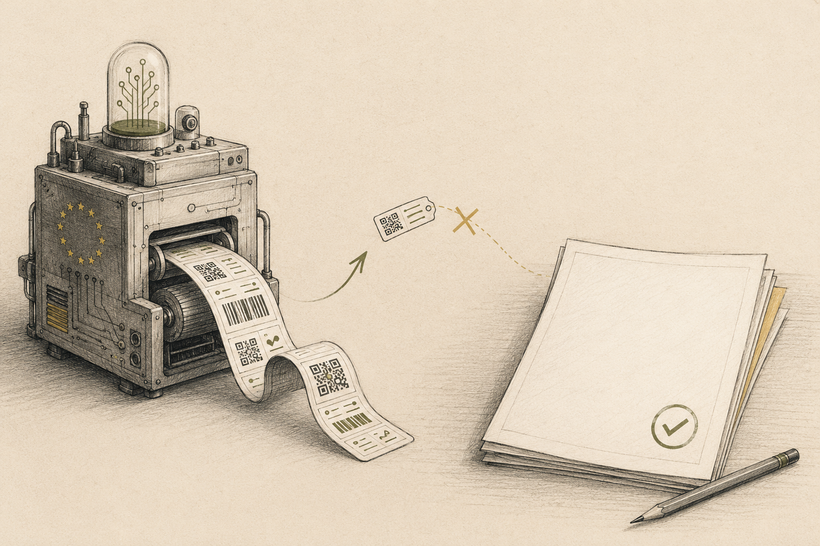
The transparency duties in Article 50 of the AI Act have applied since 2 August, and the one everybody is bracing for, marking AI content in a machine-readable format, belongs to whoever supplies the model rather than to the small firm using it.
What came into force
It has applied since Sunday, with the fines behind it: up to 15 million euros or 3% of worldwide annual turnover.
The implementer's reading
Most coverage flattens this into "you now have to label your AI content", and that is where the money leaves the building. If you build on the OpenAI or Anthropic API, 50(2) is not yours, and buying watermarking is paying for somebody else's problem.
What lands on you is 50(4), disclosing deepfakes and AI text on matters of public interest. It carries an exit written into the law: it does not apply where there has been human review and someone holds editorial responsibility. Most of what a small firm publishes fits there, if that person exists and actually reads the draft.
The trap is 50(1), the notice that you are speaking to a machine. That one is the provider's, and a provider is whoever puts the system into service under their own name. A branded assistant on your site can put you on that side.
The move this week
One sheet of paper, one hour. For every AI surface you run, write down whether you are the provider or the deployer. Name who carries editorial responsibility for the AI-assisted text you publish. Check that your site's chatbot identifies itself on first contact. Buy nothing.
Related reading
This is the same problem as The standard that is just a folder: making your operation legible to a machine. Since Sunday, part of that legibility has stopped being an edge and become a duty.